

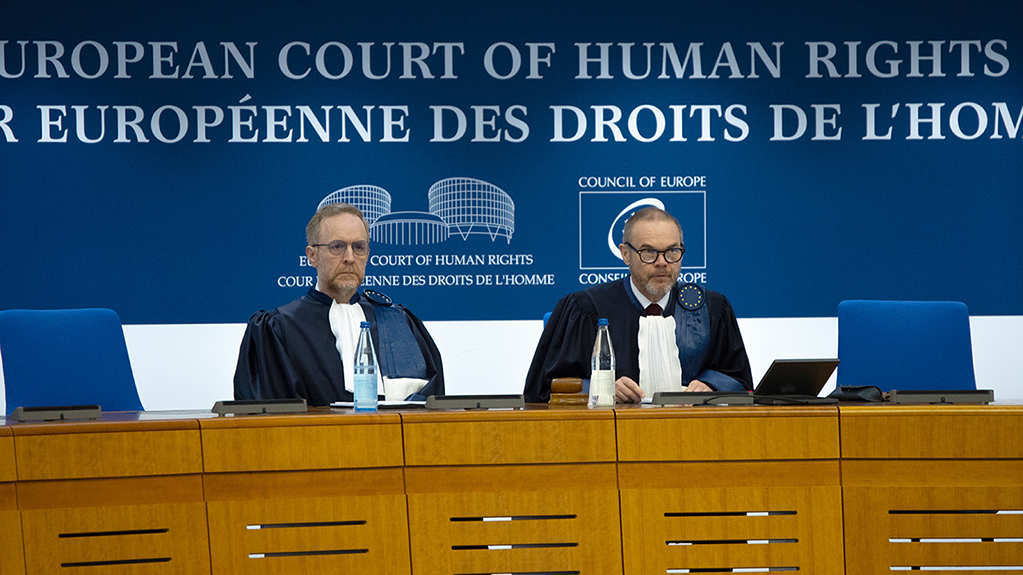
The Grand Chamber of the European Court of Human Rights delivered its judgment on the case of the victims of the protest in front of the Parliament building on 20–21 June 2019.
News




The Grand Chamber unanimously found that, by the Georgian state, there had been:
- a violation of both aspects of Article 3 (prohibition of inhuman or degrading treatment/lack of effective investigation) of the European Convention on Human Rights with respect to 24 of the 26 applicants;
- a violation of Article 10 (freedom of expression) with respect to 14 applicants;
- a violation of Article 11 (freedom of assembly and association) with respect to 11 applicants
In addition, the Grand Chamber found that Article 38 (the obligation to provide all necessary facilities during the examination of the case) had not been violated.
Regarding the procedural aspect of Article 3, although the investigation had been ongoing for more than five and a half years, it had not yet resulted in a comprehensive assessment of all the relevant circumstances, nor led to findings or charges in relation to the applicants’ ill-treatment or the identities of the State agents who had used – or ordered the use of – allegedly excessive force against them.
Regarding the substantive aspect of Article 3 he Court’s view was that the Georgian legal framework must, at the very least, lay out a number of safety requirements as to the use of kinetic impact projectiles by the police during demonstrations, such as that they be deployed only in a targeted manner – rather than as a means of general crowd control – and in such a way (having due regard to the technical characteristics of the model used) as to minimise the risk to the targeted person’s life and health.
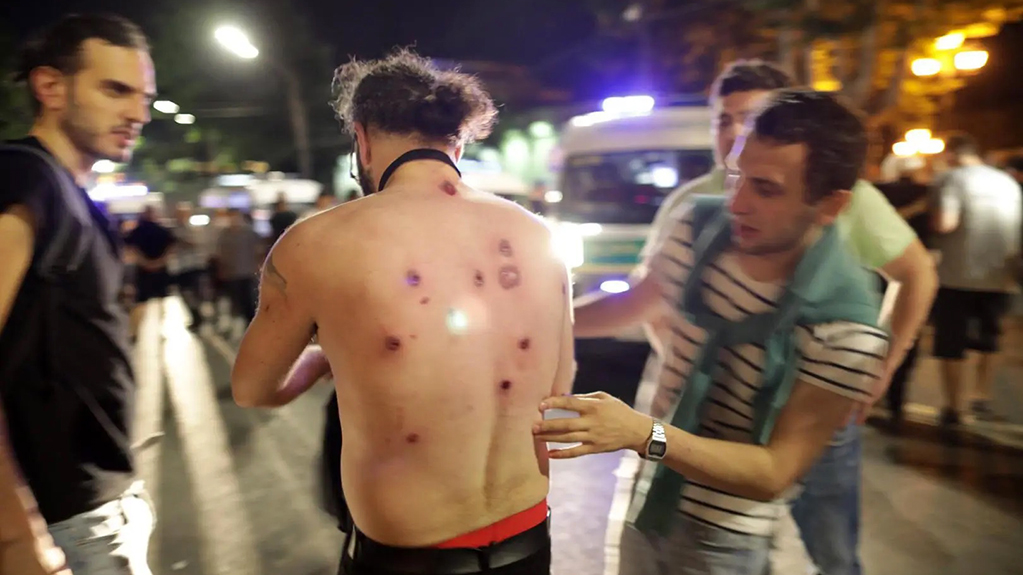
The Grand Chamber noted that the Georgian police used rubber bullets as a general “crowd-control weapon.”
“About 800 had been fired over three to four hours, and often towards people’s heads and upper bodies, as in the case of 17 applicants.
A large number of multiple-projectile rounds had reportedly been fired, and there was no indication that officers had issued any warning before firing – on the contrary, the Minister of Internal Affairs had later stated that, in such circumstances, that was not called for. It seemed also that the officers had received no training on the safety risks posed by rubber bullets, and frontline officers had not had to obey a strict chain of command.
In light of the ineffective investigation and the number of shortcomings in the Georgian legal framework that had had a bearing on the manner in which the demonstration had been dispersed, the Court found that there had been a violation of both aspects of Article 3.”
The Court held that Georgia was to pay two of the applicants 75,000 euros (EUR) each, and two of the applicants EUR 85,000 each in respect of pecuniary damage. It held that Georgia was to pay all of the applicants various amounts set out in the judgment in respect of non-pecuniary damage, and EUR 38,414.99 jointly to 22 applicants in respect of costs and expenses.
“The case Tsaava and Others v. Georgia concerns the dispersal by the police of a major anti-government protest on the night of 20–21 June 2019 in front of the Parliament building in Tbilisi. The protests were sparked by a member of the Russian Duma sitting in the Speaker’s chair in the Georgian Parliament and delivering a speech in Russian during a session of the Interparliamentary Assembly on Orthodoxy.
The applicants are 26 Georgian nationals. All but one (a bystander) were either participants in the demonstration or journalists reporting on the protest. The majority of them sustained injuries as a result of the authorities’ use of rubber bullets (‘kinetic impact projectiles’), while some were victims of police excessive use of force.
The applicants complained of violations of Articles 3 (prohibition of inhuman and degrading treatment), 10 (freedom of expression), 11 (freedom of assembly) and 13 (right to an effective remedy) of the Convention. In the course of the proceedings, some of the applicants also alleged a breach of Article 38 (obligation to furnish all necessary facilities during the examination of the case).
“A judgment was delivered by a Chamber of the Court on 7 May 2024, in which violations were found of the procedural aspect (lack of effective investigation) of Article 3 in respect of 24 of the applicants. The Chamber considered that the investigation had failed to meet the required standard of thoroughness and effectiveness in a number of respects, and that it had failed to conclude within a reasonable time. The Chamber refrained from taking a decision regarding the merits of the substantive aspect (prohibition of inhuman or degrading treatment) of Article 3, and from taking a decision regarding the admissibility and merits of the complaints under Articles 10 and 11. It held that Georgia had complied with the obligations under Article 38, and that there was no need to examine the complaints under Article 13. The Chamber also indicated to the Georgian authorities under Article 46 (binding force and enforcement of judgments) their obligation to reactivate the investigation.”
On 1 August 2024, the applicants requested that the case be referred to the Grand Chamber, which was granted.
Georgia's Association of Young Lawyers (GYLA), which represented the victims of the 20 June events before the Strasbourg Court, believed that the Court’s Chamber could also find a substantive violation of the rights guaranteed by Articles 3, 10, and 11 of the Convention.