
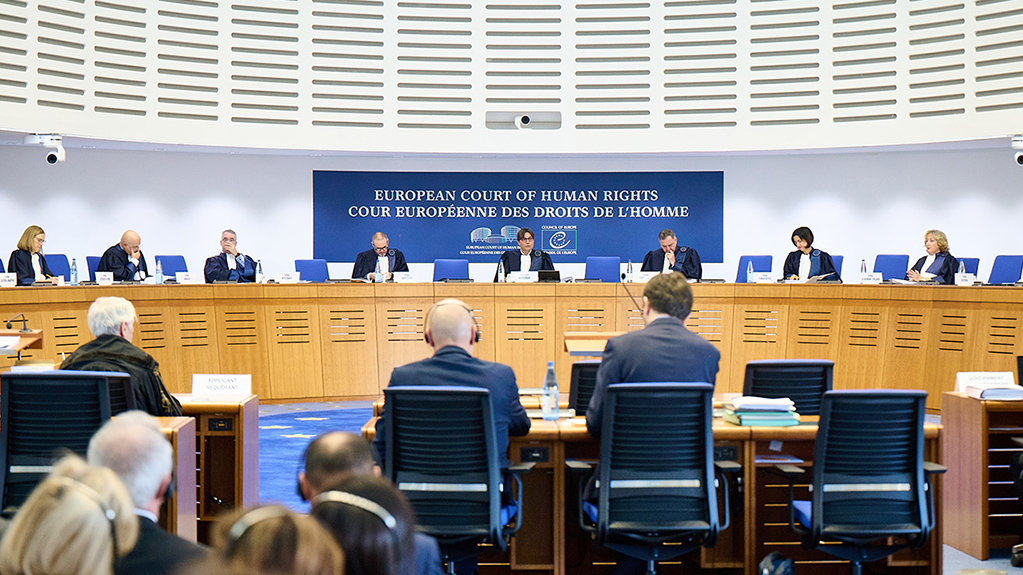
According to the Georgian Young Lawyers' Association (GYLA), a total of 22 parties are involved in the case concerning Russia's “Foreign Agents Law” at the European Court of Human Rights (ECHR). In addition, the Council of Europe's Commissioner for Human Rights, the Venice Commission, and the international human rights organisation Amnesty International joined the case as third parties. GYLA notes that this high level of third-party engagement and the Court's decision to accept nine formal written positions strongly indicate that the case addresses a serious human rights protection issue.
News



The opinions expressed by the third parties align with the complainants' written positions and the legal reasoning outlined in the complaint. Both the complainants and the third-party participants indicate that the “Russian law” is not an isolated issue. Subsequent legislative amendments, notably the “Foreign Agent Registration Act” and amendments to the “Georgian Law On Grants”, continue the legal framework initiated by the Law “On Transparency of Foreign Influence”, GYLA states.
The human rights organisation summarised the opinions submitted by third parties. According to GYLA:
- The Council of Europe Commissioner for Human Rights notes that the use of terms like “organisation representing the interests of a foreign power” to label civil society organisations and human rights defenders as “enemies of the state,” “global war parties,” and the “deep state” is already harming the reputation of civil society groups in Georgia.
- Alliance Defending Freedom International states that the “Russian law” represents legislation that limits freedom of expression and the right to assemble, similar to laws in Russia, India, and China.
- The Venice Commission emphasises that the “Russian law” is broad and ambiguous, granting excessive discretionary powers to the relevant authorities.
- Crew Against Torture points out that the law contradicts the principles of foreseeability.
- Media Defence highlights that the “Russian law” in Georgia, along with laws on “foreign agents” in Russia and other countries, aims to stigmatise and discredit civil society organisations. These organisations defend human rights and independent media that are critical of the government.
- Hungarian civil society organisations note that, although such laws are often described as a way to “protect national sovereignty” or “increase transparency,” in fact they aim to suppress critical opinion and weaken democratic institutions.
- International Network of Civil Liberties Organisations states that the “Russian law" resembles restrictive laws adopted in other countries, and its operation irreversibly impacts civil society, even if they are not directly affected.
- The International Federation for Human Rights (FIDH) and the Memorial Human Rights Defence Center explain that the court should concentrate on Article 18 of the European Convention on Human Rights (“Scope of application of restrictions on rights”), as the Russian example demonstrated that the developments had turned into an example of a totalitarian regime.
- Amnesty International observes that the state fails to prove the existence of a real threat, and it expresses distrust of all non-governmental organisations. This raises the risk that civil society organisations will be hindered from operating freely and safely.
According to GYLA, although third parties are not involved in the dispute, they play a crucial role in offering objective, academic, and theoretical explanations of the substantive legal issues. In some cases, their conclusions align with the court decisions.
The Georgian Young Lawyers Association filed a complaint against the “Russian law” with the European Court of Human Rights a year ago. The complaint was submitted on behalf of 16 media organisations, 120 civil society organisations, and four individuals.
The applicants claim that the Georgian state violated their rights protected under the Convention, including: freedom of assembly and association (Article 11); freedom of expression (Article 10); the right to respect for private and family life (Article 8); protection against discrimination (Article 14); the right to an effective remedy (Article 13); and the scope of restrictions on rights (Article 18).