
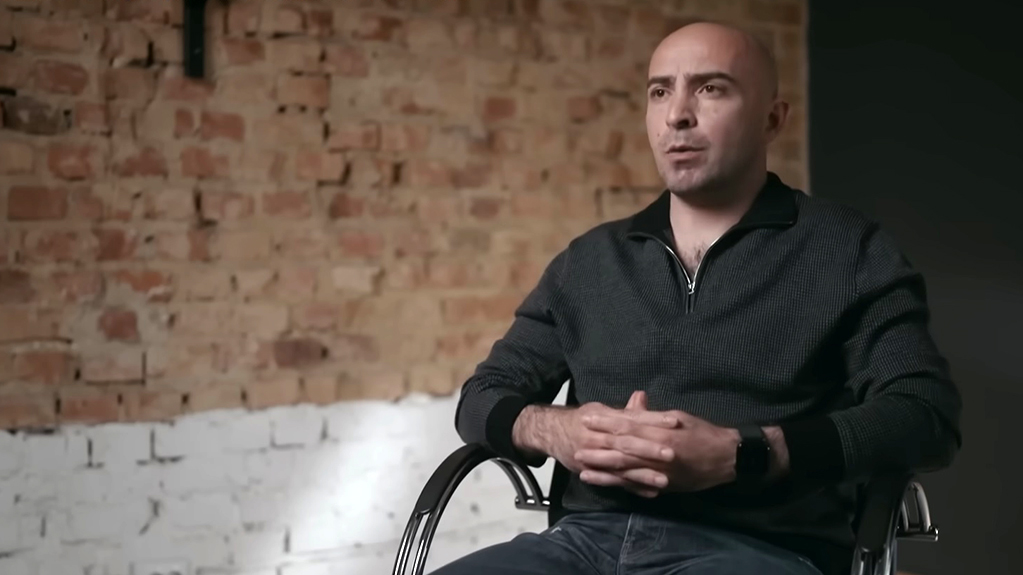
Lasha Shergelashvili, the former head of the Armaments Division of the Special Tasks Department at the Ministry of Internal Affairs, noted that during the BBC’s investigation, he had the impression that the authors had consulted lawyers from the International Criminal Court in The Hague. The investigation focuses on the alleged use of a World War I–era toxic substance against participants in the anti-government protests in Tbilisi in November–December 2024.
News



During the conversation, journalists told me that whether they [the government] knew what terrible liquid or chemical compound they were using didn't matter because if they didn't know, then it was an experiment. If so, they experimentally poisoned people without any idea of what they were using. This is a far more dangerous crime committed against humanity than if it had happened intentionally.
After the process ended, they told me it was not too late to change my mind and refuse to participate in the film. […] they explained that if I took part, they were obliged to warn me that pressure would be applied. Since I do not speak English, we had a translator, and as they translated, this is what they told me... the government would definitely try to discredit me, and surely start persecuting my friends. If I were prepared for this, then they would proceed with releasing the film. I said yes. Then there was a second stage, when they told me that once this process begins, I should not be surprised if I am summoned as a witness to The Hague. I told them that if this process would help my homeland, I was ready for it,” Shergelashvili, who now resides in Ukraine, said in an interview with Droeba.
Lasha Shergelashvili held a high position in the Georgian Special Operations Command until 2022. He suspects that during the winter of 2024, protesters might have been exposed to the same chemical he tested in 2009 for possible use in water cannons.
“During my time there, I was aware of every single item in our supply. The chemical consists of two separate components: powder 3439 and liquid 1710. The containers used for mixing them were about 20 litres in capacity. The powder was in 1-litre plastic jars. What really caught my attention was the symbol of the skull and crossbones. We tested this chemical mixture soon after it was delivered,” Shergelashvili says in the BBC investigative film.
He added that during the substance's testing, at least two of his colleagues felt nauseous.
“I was standing nearby too, and I was curious to try it myself… [During the testing], your eyes start to burn, and you have trouble breathing,” said Shergelashvili, adding that the effect of the chemical liquid was different from anything he had encountered before.
“We noticed that the effect was not wearing off, as is the case for [regular] tear gas. Even after we washed our faces with water and then with a special solution of baking soda and water, which was prepared in advance, we still couldn't breathe freely,” Shergelashvili told the BBC.
He stated that, based on the test results, he recommended refraining from using the chemical, but it was still being added to the water supply - at least until 2022.
The BBC managed to obtain a copy of the inventory from the Special Tasks Department, dated December 2019. Journalists found that it listed two unnamed chemicals, labelled “Chemical liquid UN1710” and “Chemical powder UN3439,” along with instructions for mixing.
UN1710 stands for trichloroethylene (TCE). The agent allows other chemical compounds to dissolve in water.
“Trichloroethylene easily penetrates the skin, lungs, and gastrointestinal tract. It impacts the nervous and cardiovascular systems, and it can also affect the liver. It is certainly not a chemical to be thrown at masses during protests. It is all about the dose, which makes the poison and the higher the dose, the more risks for complications,” says Christopher Holstege, Chief of Division of Medical Toxicology at the University of Virginia.
UN3439 was much harder to identify since, as the BBC explains, it is an umbrella code for a whole range of industrial chemicals, all of which are hazardous. The only one of these that the BBC found to have ever been used as a riot-control agent is bromobenzyl cyanide, also known as “camite.” The substance was first used by French forces in World War I and was soon withdrawn due to the long-lasting effects of exposure.
The Georgian Dream's State Security Service stated that under the codes indicated in the BBC material - UN1710 and UN3439 - the Ministry of Internal Affairs (MIA) purchased chlorobenzylidene malononitrile and the solvent trichloroethylene in 2007 and 2009. As part of the investigation, trichloroethylene was also seized at MIA. According to the SSSG, this involved 880 litres of written-off balance (remains).
As part of the five-day investigation, the MIA also seized the chemical substance "propylene glycol". The SSSG stated that “It was found that in early December 2024, specifically on the night of December 4-5, the substance “chlorobenzylidene malononitrile” was used to control crowds, and “propylene glycol' was used as a solvent. None of the above substances belongs to the category of prohibited substances,” said Lasha Maghradze, the First Deputy Head of the SSSG.
Chlorobenzylidenemalononitrile is also known as CS gas, or tear gas.
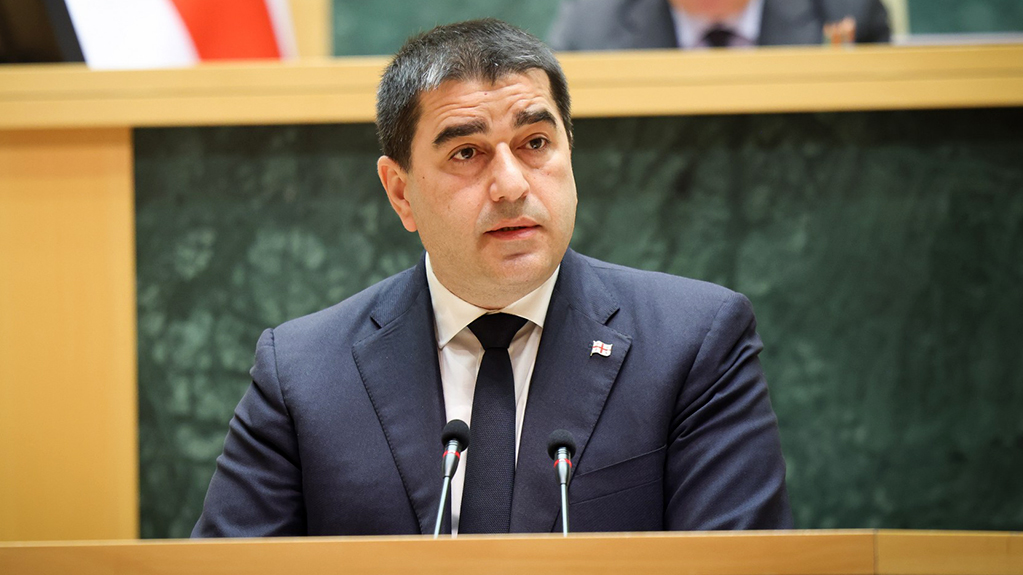
According to Georgian Dream Prime Minister Irakli Kobakhidze, the investigation has “unequivocally proven” that the Ministry of Internal Affairs did not use “camite” or any other prohibited substances when dispersing violent demonstrators last year.
Following the BBC's investigative report, it was revealed that the SSSG is conducting “search and investigative procedures” against Lasha Shergelashvili, a former senior official of the MIA's Special Tasks Department. The case concerns the “weapon found in the forest” incident that occurred before the October 4 demonstration. According to the First Deputy Head of the State Security Service, the investigation is “working intensively” on the version that the purchase and hiding of ammunition, explosives, and devices was carried out on Shergelashvili’s “orders.”